Read All About It
Every era now prints its own newspaper and it reports on the world that carries on without you: what the people you've met have been up to, the rumours about you, and the letters and adverts you send in.
The Timekeeper · 2026-10-31
Most AI games have no world outside the scene you're in. Walk out of a tavern and everyone in it stops existing until you walk back in. The blacksmith never finishes his sword, the rival never makes her move, and nothing happens anywhere you aren't looking.
Live Through Time has always run a world behind your back. Now it has a newspaper to tell you about it.
The world keeps moving
Everyone you meet has something they want: a debt to clear, a rival to ruin, a shop to open. While you're elsewhere, the clock keeps running and they keep working at it. When one of them gets there, the world changes, whether you were watching or not.
Until now you mostly found out by stumbling into the consequences. Now it's in the paper.
About Town
Each edition carries an About Town column: what the town noticed about the people you know while you were busy. The widow Hale has taken the old assay office and opened a tea room. Captain Ward was seen counting gold at the bank on Tuesday. A quarrel was overheard behind the Oriental.
The paper only reports what the town could see from the outside, never anyone's secrets, and it never prints the same news twice. Some days there's nothing to say. Other days you'll open the paper and realise someone you trusted is a lot further along with their plans than you thought.
You're in the paper too
Every edition carries a rumour about what you've been up to, never naming you, always a little wrong. How prominently it's printed depends on your Renown:
- Nobody knows you: a couple of lines among the gossip at the bottom of the page.
- People are starting to talk: a story in the side column.
- You're the talk of the town: the front page, right under the masthead.
And if the authorities are after you, there may be a reward notice with your description on it.
The people around you read the paper too. For a week after each edition, they can bring it up: gossip about the headlines, a pointed remark about that rumour, a stranger who recognises you from the description.
Write to the editor
You can now write to the paper yourself. Send a letter to the editor and, if it reaches the office before the next edition goes to press, it's printed, sometimes with a dry reply from the editor. Or place an advertisement: a reward for information, a room wanted, a message only one person will understand. Adverts cost money, in the era's own coins (half a crown in the Daily News, a dollar in the Daily Nugget), and if you can't pay, the advert comes back unprinted.
The paper's own small adverts are priced in the same coins, and some are things you can act on: a room to let, work going at the docks, a reward for a lost watch.
Every era reads its own paper
There's no generic "Daily Gazette". Each era has a publication of the time and place, in its own voice and on its own schedule:
- The Acta Diurna, posted in the Roman Forum on market day.
- Paul's Cross Proclamations, cried aloud after the Sunday sermon in plague-year London.
- The Kawaraban, woodblock broadsheets sold by criers in the streets of Edo.
- The Nassau Packet: ships' gossip and months-old London papers, read aloud in the taverns.
- Le Père Duchesne, the foul-mouthed paper of the Paris sans-culottes.
- The Daily News, the paper Charles Dickens founded in 1846.
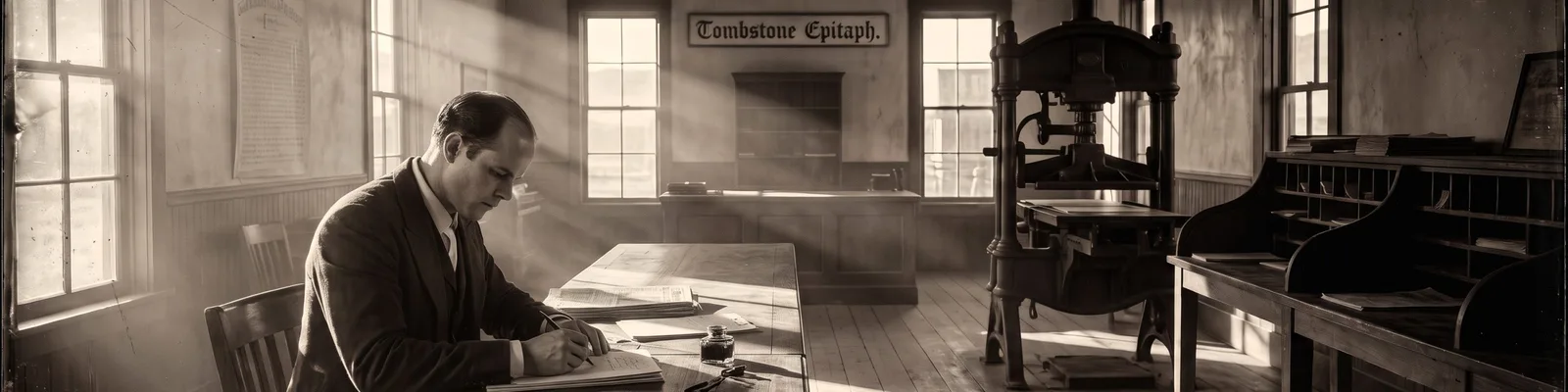
- The Daily Nugget in Tombstone, the cowboys' paper, feuding with the pro-Earp Epitaph.
- The Wipers Times in the trenches, Novaya Zhizn in Petrograd, and The Ship's News-Sheet for a sailor, wherever his ship lies.
- The Delta Register, Chicago Daily News, The Daily Sketch, and Neues Deutschland behind the Wall.
Papers that really were dailies now come out every day: a slimmer edition on weekdays and a full one at the weekend. The rest keep their own rhythm, so in Rome you still wait for market day.
Each edition mixes real events from that exact week in history, drawn from Wikipedia, often with a picture printed as an engraving or a halftone photograph, as the papers of the time would have printed it. And it's written in the language you play in.
A paper you can hold
The paper looks the part, too: it lands on the table at an angle, with a masthead in the type of its time, the price in the era's coins and columns of print. Old editions hang on a newspaper rack, so you can look back at what the town was saying a month ago.
What would you want to read about yourself in the morning paper? Tell us on Discord.
In the manual: The Newspaper · The World Moves On · Letters & Telegrams · Vitality, Stress & Renown
Thanks for reading.
See you in the past…
The Timekeeper